Riczu Works
A price calculator and a 3D pergola designer on a metalworks site.
A pergola or a custom gate is an expensive, rare purchase, and buyers face two unknowns: the price, and how it will look on their own terrace. Until both are answered, they don't request a quote.
Riczu Works sells gates, canopies, and fences made in its own workshop, alongside bioclimatic pergolas from RGM Italia. The site keeps the two lines separate, but both lead to one survey and one contact person through handover.


The price calculator
The buyer picks a model, sets the dimensions with sliders, and gets an itemized price band. The price question is settled on the first visit, so the quote request starts mid-conversation instead of cold.
The 3D designer
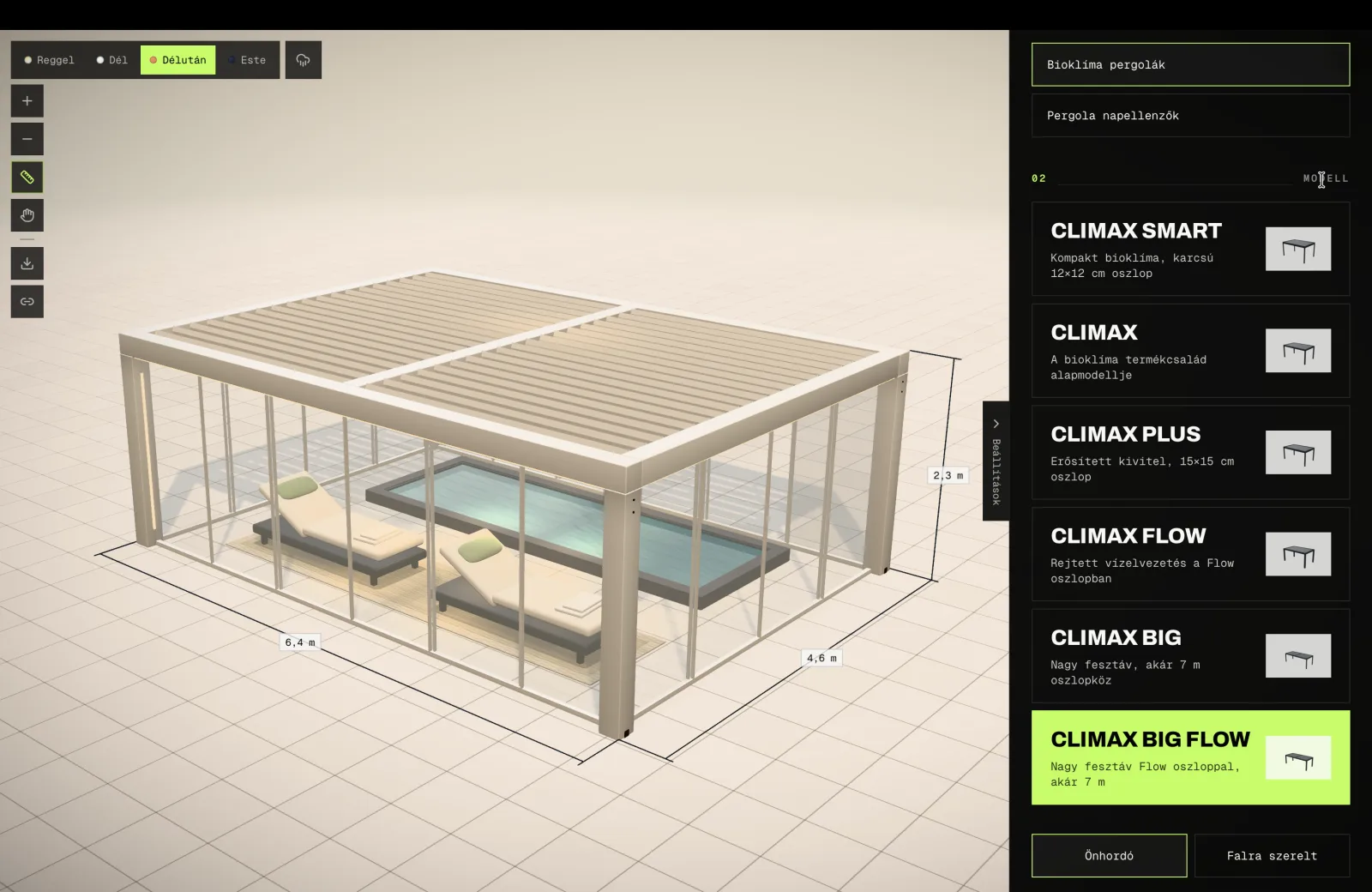
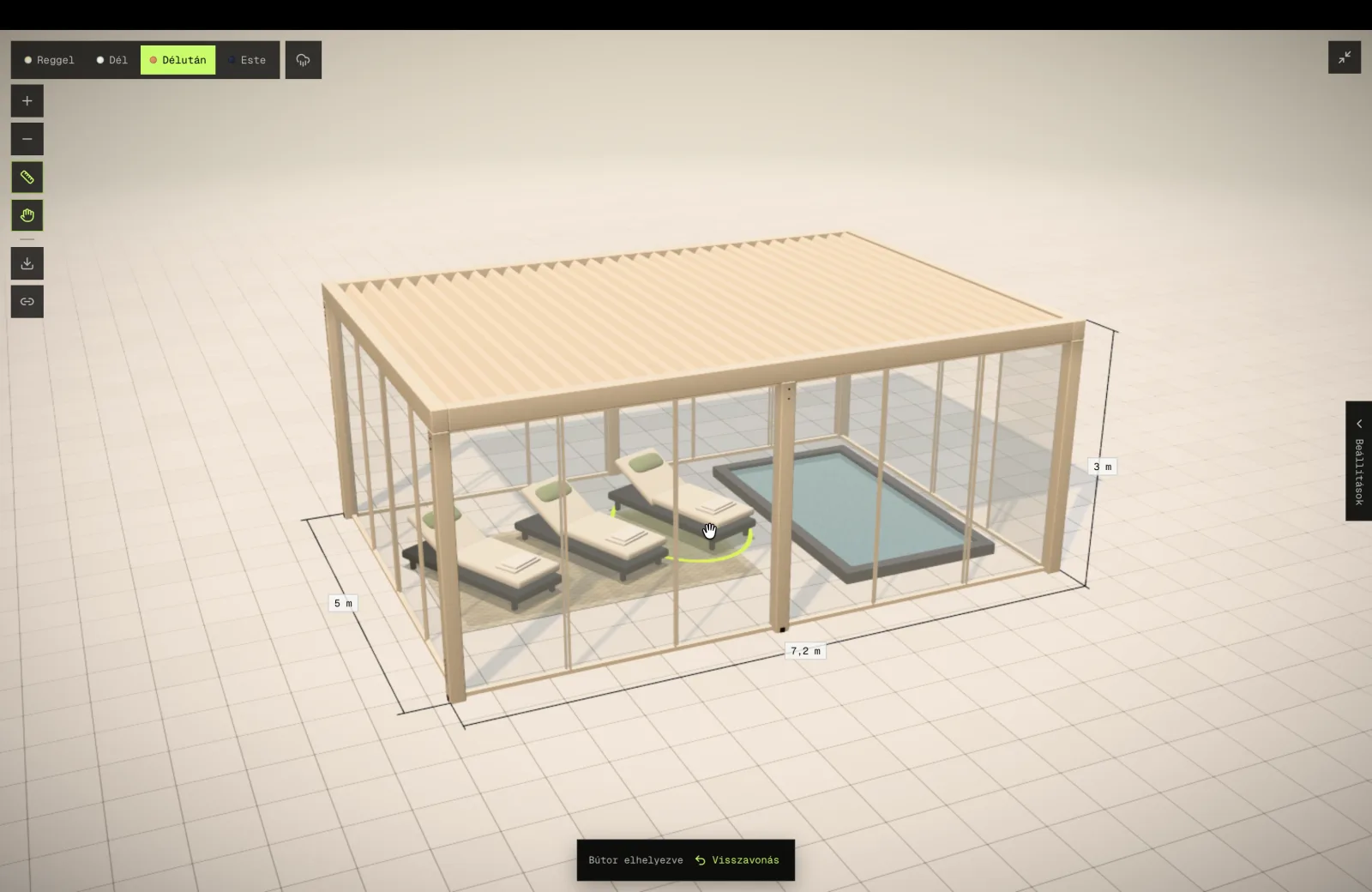
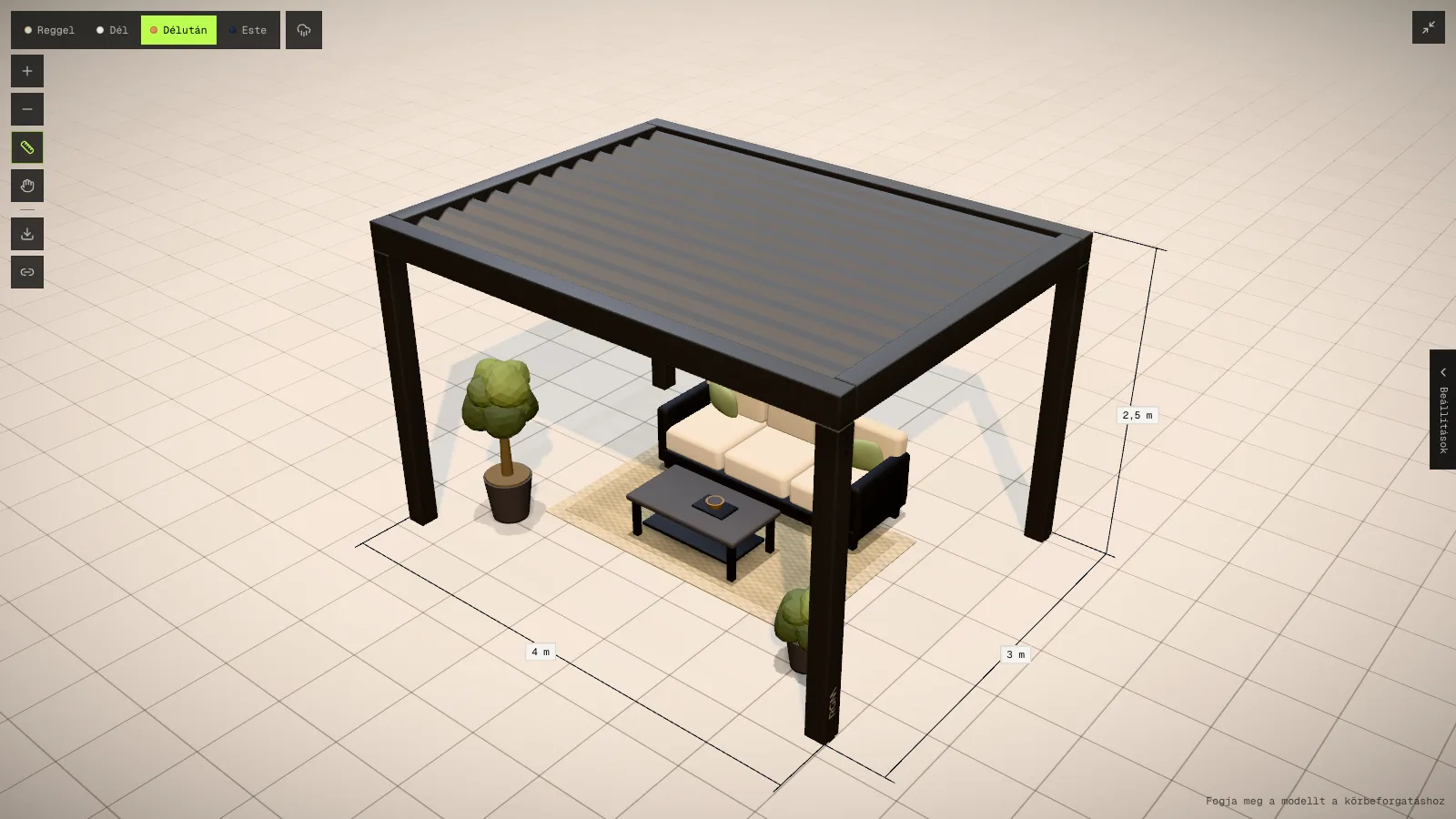
The designer follows the real RGM catalog, with four structure types, accurate proportions, and the catalog's structural rules. Past a 5.2-meter span, a center post appears; the CLIMAX BIG gets two louver fields with a dividing beam. Colors come from the factory powder-coat palette.
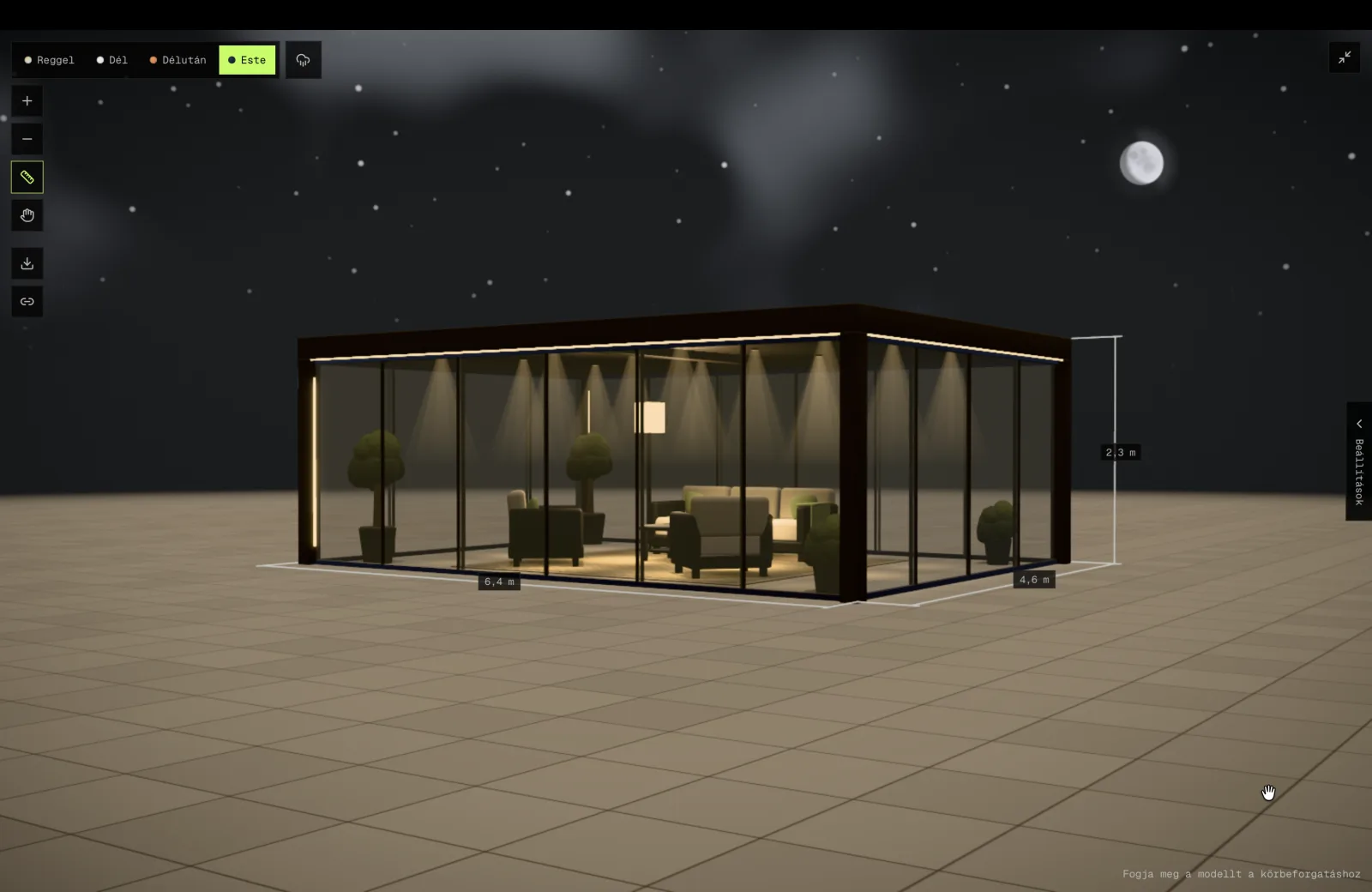
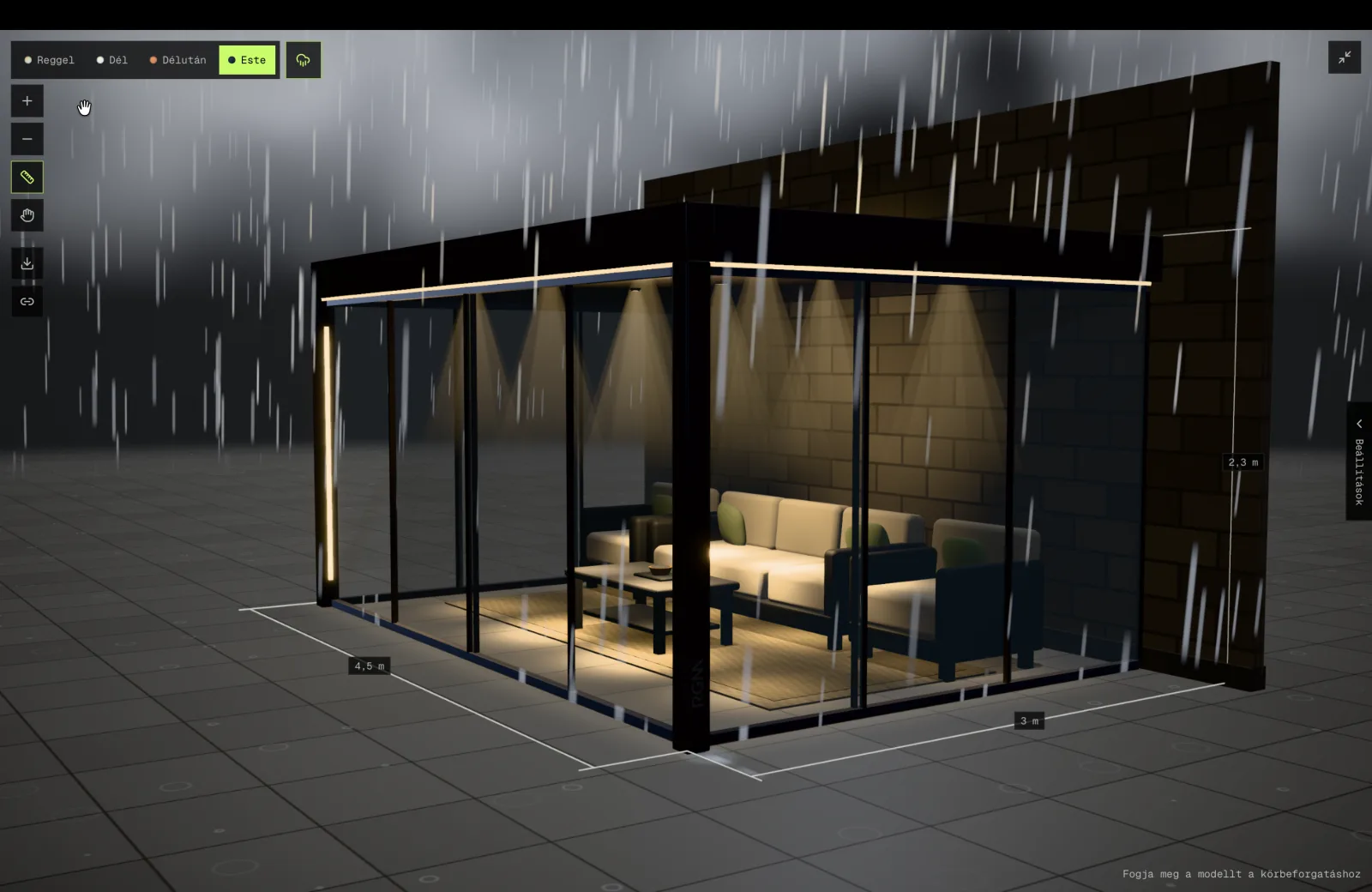
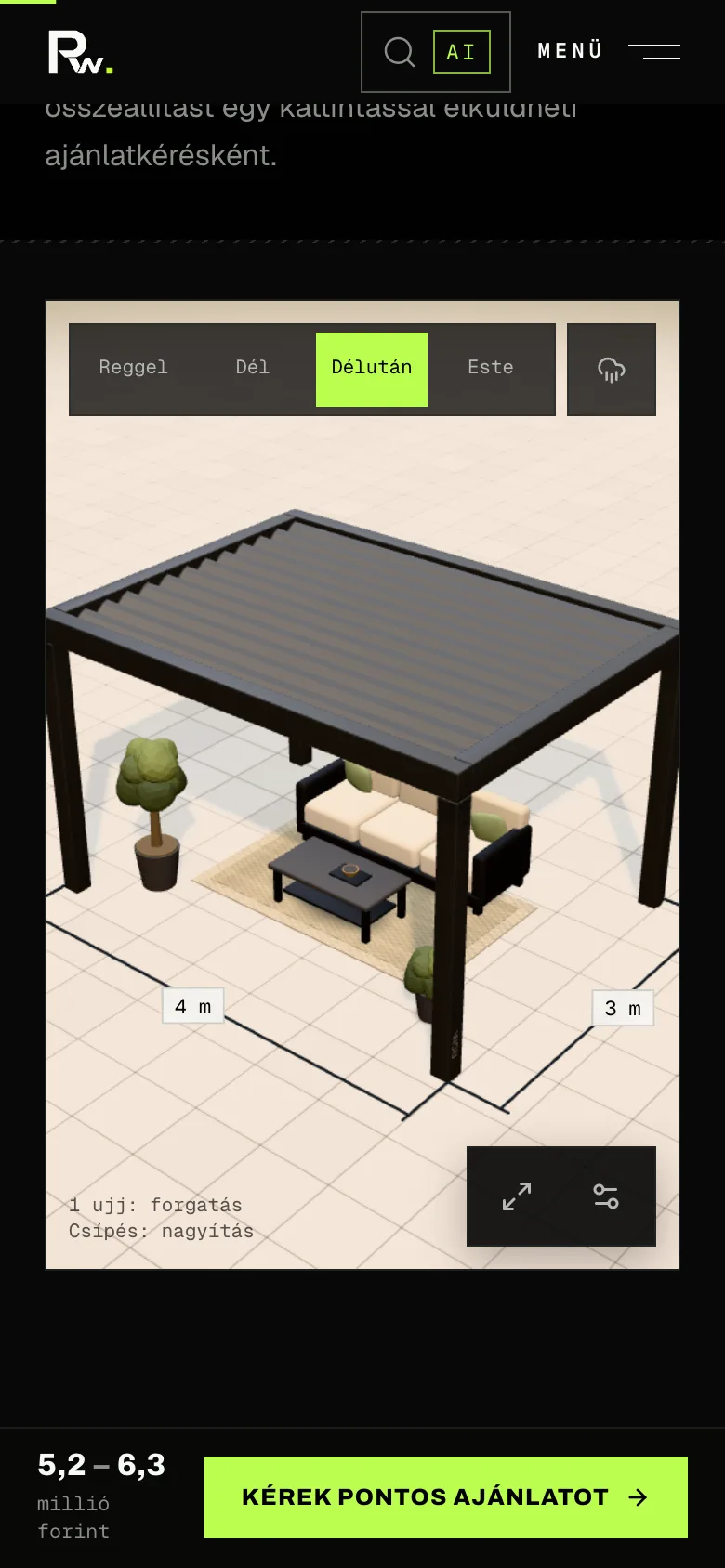
The sun drags from morning to night, the perimeter LED comes on at dusk, and in rain mode drops hit the closed louvers. Furniture can be arranged under the roof; glass walls and terrace heating toggle on.
The designer prices from the same model as the calculator, the live price band stays on screen while you rotate, and a finished configuration goes into the quote form with one click. This is the largest piece of the project: about fourteen thousand lines of three.js, loaded only on this page, running smoothly on phones.
Try the designer live: riczu.hu/en/tervezo.
Design
The interface pairs a dark olive base with neon-lime accents and edge-to-edge photos of finished terraces. For a premium structure, those photos show the result better than a claim can. The bilingual site runs on Next.js, with the Console (Ctrl K) in the navigation for search and an AI mode.
Tell me what you're working on.
Happy to talk about a product, a collaboration, or a role. A few sentences is enough to start.