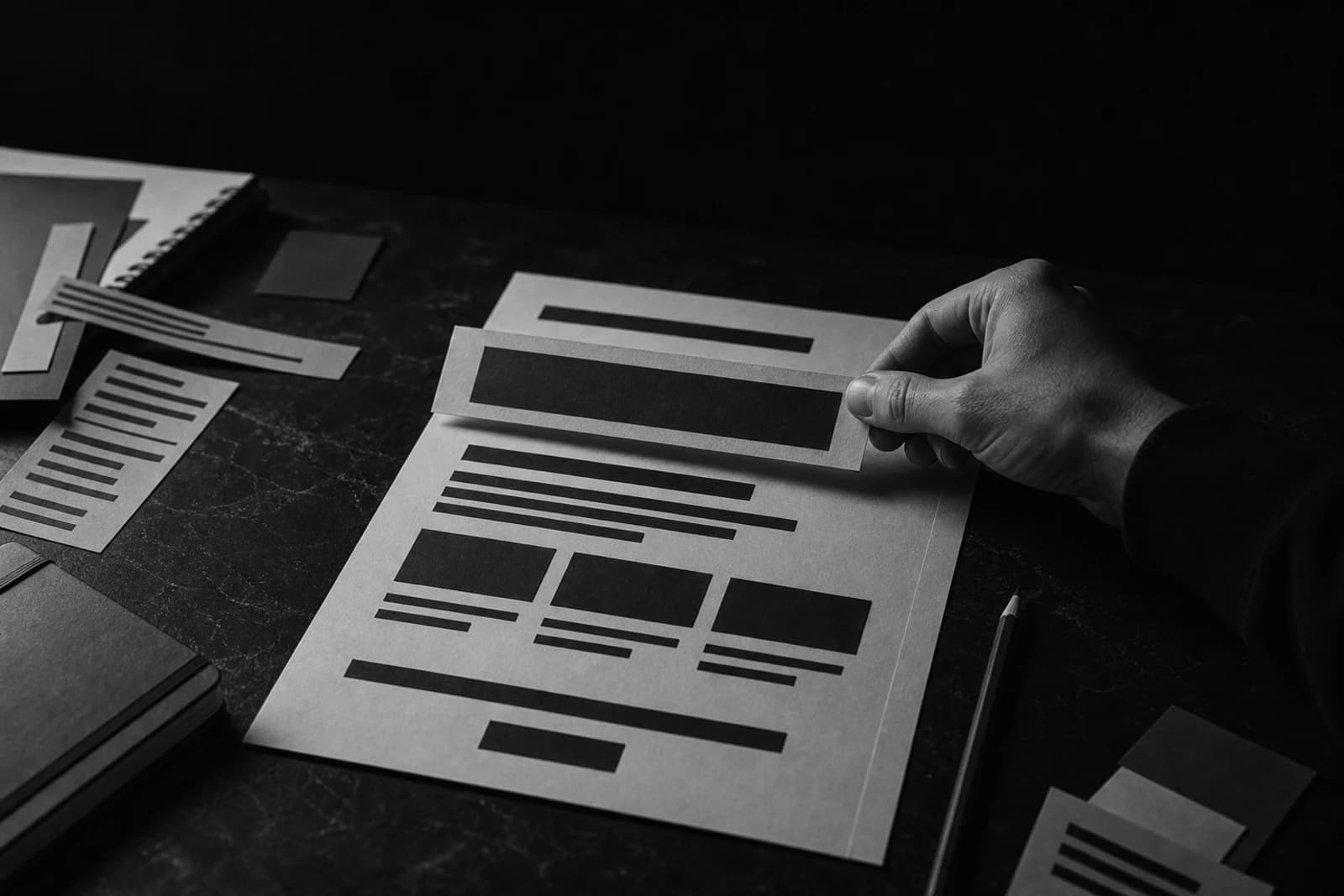
Copy is the wireframe
A few years back, a client told me their landing page wasn't converting. Bad layout, they said. I changed three lines of copy. Conversion doubled. Not a single box moved.
That's when I stopped lying to myself about what "designing a page" even means.
Lorem ipsum is the lie
Nobody designs for placeholder text. Everyone uses it anyway. Then the real copy lands, the headline is two lines too long, the CTA breaks the column, the value prop fights the hero, and the layout falls apart. Because it was never for a specific message. It was for an abstract content shape.
The hierarchy of any page is a copy hierarchy. Headline. Subhead. Body. CTA. Four lines. That's the page. Everything else is arrangement.
A wireframe with strong words and ugly boxes is still convincing. A wireframe with beautiful boxes and lorem ipsum is a screensaver.
Designers don't write; they think in words
I'm not saying every designer should be a copywriter. I'm saying the job is to refuse to design until somebody has decided what the thing actually says.
Across 16 years and a long list of clients, the projects that worked share one thing. The writer and the designer were in the room from minute one. Not "design first, send to copywriter for fill." The page got built around a sentence somebody had to fight for.
When I work on Phora, every feature starts with the headline. One sentence. If I can't write it, the feature isn't designed yet. The Figma file comes after the sentence, not before. Sometimes the sentence is the entire work.
The fake wireframe
The wireframe everybody draws first is fake. It's a placeholder for thinking that hasn't happened. You can move the rectangles around forever, and a page that doesn't know what it wants to say will not start saying anything new.
Words first. Boxes after. Otherwise the boxes don't mean anything.
There's always a next level.
If you like what you see (whether you're building a product or a team) I'd love to hear about it.